Guides
Part of A ten-step checklist for company verification, legal name first
Company verification facts: what registries can show
Company verification facts explain what state business records can show—and what names, status labels, filings, and identifiers do not prove.
A finished verification is a set of sentences you are entitled to write down. Most of the trouble in this field comes from writing a sentence the evidence does not carry: "the company is legitimate", "they check out", "verified". None of those is a finding. They are summaries of findings, and the summary is where the accuracy leaks out.
What follows is the list of propositions a registry-based check can actually support, each paired with the one it is usually mistaken for.
What to take away
- Every finding is about a record, on a date, held by one office. Write it that way.
- The strongest thing a register can tell you is that an entity exists and is administratively current in one state.
- Everything about trading, solvency, and honesty sits outside the register, and no amount of registry work reaches it.
The propositions, and their near-misses
Supported: an entity of this exact legal name exists on this state's register under this identifier.
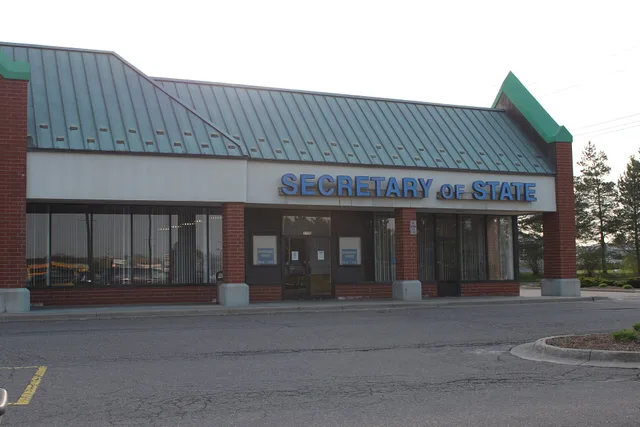
Start with the relevant state's official business-entity search, often maintained by its Secretary of State. Delaware's search is provided by the Delaware Division of Corporations; these state records are not one national register.
What a registry check supports
Supported
- Exact legal name
- Entity exists on register
- Status string
- Office showed this status
- Formation date
- Created on register date
- Documents filed
- Filed with this office
- Reported names
- Names at last report
Mistaken for
- Exact legal name
- This company exists
- Status string
- Company in good standing
- Formation date
- Business traded since then
- Documents filed
- Everything that happened
- Reported names
- These people run it
Supported: on the date I looked, the office showed this status string. Mistaken for: the company is in good standing. The status describes the entity's relationship with one office, and its vocabulary differs by state. Lookups may show labels such as Active, Good Standing, Forfeited, Dissolved, or Revoked; copy the displayed wording rather than treating those labels as equivalent. That is why registration status is worth reading as a term of art rather than as a verdict.
Supported: this entity was created on the register on this date. Mistaken for: the business has traded since then. A formation date after a dormancy and a reinstatement is an old date on what may be a new operation.
Supported: these documents were filed with this office on these dates. Mistaken for: this is everything that happened. A filing history holds what one office required, and holds nothing about debts, disputes, licenses, or tax.
Supported: the company reported these names in these roles at its last periodic report, where this state collects them. Mistaken for: these people run the company. Absence proves nothing, presence is weak, and authority to bind lives in governing documents rather than on a state form.
The filing's name and reported fields depend on the state and entity type. California's Statement of Information is one example of a state filing that can report officer or manager information.
Supported: documents can be served on the company at this address, subject to the state's rules. Mistaken for: the company operates here. The agent's address is a delivery point and frequently serves thousands of unrelated entities.
Supported: the trading name and the legal name are linked by this assumed-name filing. Mistaken for: the company owns the name. Rights to use a name in trade come from a separate system, and the USPTO's own note on what a trademark protects is the shortest way to see how far the two are apart.
An assumed-name filing may be called a DBA, fictitious-name filing, or trade-name registration; the term and filing office—state, county, or city—depend on the jurisdiction. For federal trademark records, USPTO Trademark Search includes applications and registrations, including marks on the Principal Register; that record is separate from a state entity filing.
Supported: this identifier resolves, on this register, to this record. Mistaken for: the number is valid. A state entity or file number identifies a record in that jurisdiction; it is different from an EIN (Employer Identification Number, a federal tax ID) and a D-U-N-S Number (a Dun & Bradstreet business identifier). A format check alone does not establish validity, and jurisdiction plus identifier is the only pair that identifies anything, as entity number lookup sets out.
Supported: I could not establish X from this source. Mistaken for: X is false. This is the most useful sentence in any verification file and the one people leave out.
Facts about the checking process itself
Nobody at the filing office verified the contents. Filing offices are generally ministerial. They confirm a form is complete and the fee is paid. Everything on the record other than the office's own status actions was asserted by the filer.
Formation filings have names such as Articles of Incorporation for a corporation or Articles of Organization for an LLC; later filings may be called an annual or periodic report. Filing fees depend on the jurisdiction, entity type, and filing, so check the filing office's current fee schedule for the amount.
Every field has an age, and they age at different rates. Formation date never changes. Identifier almost never changes. Names, addresses, and agents change on filing. Status can move without any filing at all, when a deadline passes.
Two offices will disagree about the same company, and both will be right. A home-state record and a foreign-qualification record describe different registrations. So do a US state record and a central national register abroad.
For a foreign-qualification record, search the destination state's official business-entity database, often maintained by its Secretary of State, for the entity's foreign registration or authority record. That record does not replace the entity's home-state record.
Registry data is not cleared for decisions about people. The Fair Credit Reporting Act (FCRA) governs consumer reports used for employment, tenant-screening, and credit decisions. The Federal Trade Commission's business guidance on using consumer reports explains key obligations, especially when a consumer reporting agency supplies the report. A company-entity lookup alone is not a consumer report, but a check involving consumer-report data needs separate FCRA analysis.
A negative result is a statement about one index, one query, one day. It is worth recording with the query attached, because the next person will otherwise repeat it and get a different answer for a reason nobody can reconstruct.
Turning findings into a defensible line
| Weak line in a file | The same finding, written honestly |
|---|---|
| Verified | Entity confirmed on the state register on this date, identifier recorded |
| In good standing | Office showed this status string on this date; record last updated on that date |
| Established in 1998 | Entity formed on this register in 1998; no evidence gathered about trading |
| Officers confirmed | Names reported at the periodic report of this date; state collects officers for this entity type |
| Address verified | Registered agent address as shown; no operating address established |
| Clean history | Filings present at the office's stated cadence with no gaps; other registers not searched |
The right-hand column takes about ten more seconds to write and survives being read back a year later by someone who was not there. That is the whole test.
Where the register stops
The propositions above exhaust a registry check. Bank details, insurance, licenses, capacity to perform, and willingness to pay are separate questions answered by separate bodies and references.
The sequence in company verification treats them as a distinct stage for that reason. A file that ends at the register and says so is honest; a file that ends there and says "verified" is not.
Common questions
If the register proves so little, why do it at all?
Because it cheaply removes the failures that are entirely preventable: contracting with a brand instead of an entity, extending credit to a dissolved shell, and quoting a name in an agreement that nobody can later match to anything.
Someone asked me to confirm a company is legitimate. What do I send back?
The propositions you can support, with dates and sources, and an explicit list of what you did not check. If a single word is genuinely required, agree in advance what it will mean and write that definition down somewhere the next person can find it.
Is a finding from six months ago still a fact?
It is still a fact about six months ago, which is all any registry finding ever was. Whether it is still useful depends entirely on which field it concerns, and status is the field that will have moved.
Can I write "no adverse findings"?
Only if you name the sources searched. Without that, the phrase invites the reader to assume you searched everything, and no verification file ever has.